This weekend our broody surrogate hen hatched seven chicks from her
clutch of eleven. To ensure the safety of the mother hen and chicks,
we moved them to the back of our largest coop. The nesting boxes where
the chicks were hatched has a separate room with a door. Closing the door
to the nesting boxes allows the hen and her chicks safety from Jake,
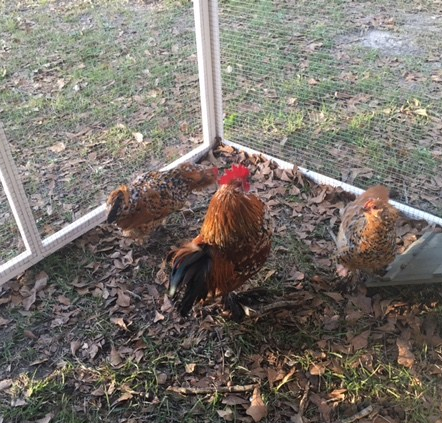
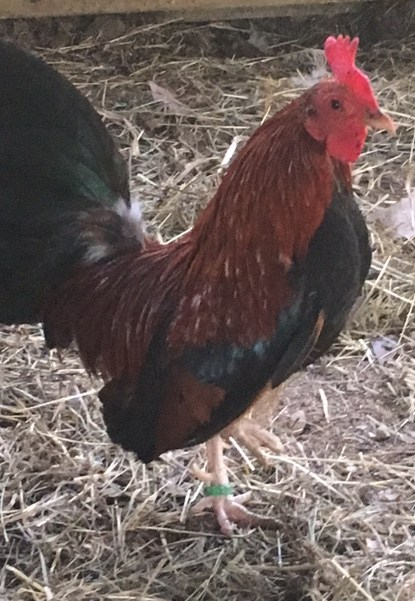
our Tom turkey, and Greg, our large rooster.
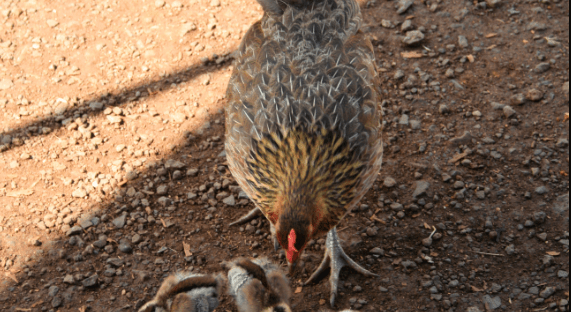
Buff and Surrogate Chicks
Mother hens are seriously protective of their young. They are quite capable
of protecting the chicks by themselves, but adult diseases inside our main
coop could kill the biddies. The Mother hen will remain with the chicks for
six to eight weeks before she will want to rejoin the flock and begin
laying eggs again. When the chicks are 18 weeks, they can be introduced
to the flock or be moved to a separate coop. As they grow, it will be
important to determine how many roosters are mixed into the group. They
will need to be transferred to new homes and not introduced to the flock.
We are not sure what we will do with any roosters that are growing at this
time. I will update you on the two sets of biddies soon.
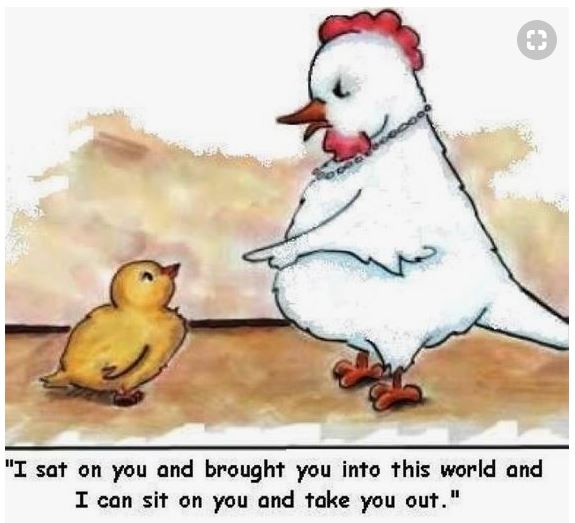
This week I’ve had my first experience with a moody, broody hen. I must admit that I am very proud of her because she has taken it upon herself to sit on a nesting box that holds a hodgepodge of other hen’s eggs.
Last week, I began to notice that most of our laying hens were choosing one of the lowest, middle nesting boxes to lay their eggs. Each day, there would be two or three mixed colored eggs until that particular box contained ten eggs. Next, those laying hens took the adjoining box and laid each day.
Finally, these egg layers had two adjacent nesting boxes filled with ten eggs of varying origins. However, I noticed that only the original box had warm eggs. Which one of my beautiful future mothers was sitting upon these eggs? For four days, I fed the chickens without seeing the broody hen, but on the fifth day, I found her. She was one of the Rhode Island Red hens with the black tipped tail. Our little Dollie is a very moody, broody girl.
I decided to leave the eggs with her inside the original nesting box, but take eggs inside the adjacent box because none of the other hens were broody. It was important to let Dollie finish out her three week quest to become a surrogate because a moody, broody hen without chicks can injure herself. Broody hens that never receive chicks will refuse to leave the nest and begin to refuse to eat or drink. Some chicken experts will purchase or incubate chicks to allow a broody hen to raise them so that her mood will break, and she will no longer have the drive to sit.
I am very excited to see how Dollie’s broody mood ends; I hope it ends in ten healthy chicks. They would be our first chicks incubated and brooded naturally without our intervention. So again, I ask: why is a broody hen so moody? Because she is FRITO-LAY
While doing research about caring for my sick birds, the best advice I found was: isolate a sick bird from the flock. I wanted someplace I could keep the sick bird or birds and have quick, easy access to them. While at the sale, Chris purchased a large bird cage.
Chicken Hospital
I keep the cage on the back porch so that I can check on the birds several times a day, feed and water them by hand, administer medication as needed.
Also, I assess symptoms and determine what illness my pets have. Three weeks ago, I noticed my Mille Fleur hens were acting sickly. I recognized that neither one of the hens were laying eggs anymore. However, I had added three bantam hens to the coop, so I dismissed this symptom as “STRESS.” On day two without eggs,
I noticed that one of the hens had swollen eyes and was struggling to breathe. She was quarantined right away. The chicken hospital had its first patient. I felt anxious about caring for her because Chris had foolishly spent seventy dollars on her and her roster at the sale. Because of her beauty, I vowed to keep her alive. I contacted a local vet for advice, and she agreed that her sinuses were filled with mucus that was causing swelling of her eyes and hardening of mucus inside her nostrils.
Treating the Ill Chickens
Chris and Bailey made a trip to Tractor Supply and purchased the antibiotic, Tylan. Tylan is a broad spectrum antibiotic that can be given by mouth. I chose this type because I was feeding the hen by hand because she refused to eat.
I also fed her pedialyte for infants with a dropper. For the first two days, I gave her pedialyte three times a day, and during the third feeding, I would add the Tylan to the dropper. The amount of Tylan given to Honey, the Mille Fleur, was based on her weight.
Mille Fleur Hens and Rooster
Before putting her on the roost, I also put warm compresses on her eyes and cleared her nostrils. By the end of the week, Honey looked so much better and began eating and drinking on her own. Unfortunately, her rooster, Mr. Big, showed similar symptoms on day five of her hospital stay. In a previous blog, I mentioned that chicken illness are highly contagious, which includes sinus and respiratory infections.
Learning from my Experiences
Upon seeing similar symptoms, Mr. Big was isolated from the other hens inside his coop and placed into the hospital with Honey. At the time of Mr. Big’s hospital stay, he was still eating and drinking on his own (I believe that I am getting better with noticing symptoms of sickness). So, I treated him with Tylan by placing it inside his water each day; so far, he and Honey continue to improve daily. Chris and I have decided to purchase a separate coop for the Mille Fleurs, and before we find a few more hens to cohabit with the pair, we will keep new hens together in quarantine so that new chickens do not expose our flock to new illnesses.
Although I am better at animal husbandry than I was at the beginning of our family project, I still occasionally find a dead hen or rooster that never displayed symptoms of sickness. Most of the time, chickens display symptoms after their little bodies are very weak.
BB Red Bantam Rooster
Yesterday, Chris found our BB Red rooster dead in our largest coop. He was one of our older bantams, but he had showed no weakness prior to his passing. I am still learning to care for my flock, and I hope I get better at recognizing illness and treating sick chickens before it’s too late. We will miss you, B.B.
Post Script—
My childhood best friend, Bubba Hendrix passed away April 4, 2018. I will miss you dearly. I love you, my friend.
Last week, my daughter found our Sultan hen dead inside our smallest coop. She had been our favorite and the gentlest chicken. We had showered Sookie with love since bringing her home, and I must admit that it was tough to prepare to bury her with my husband and kids.
Sookie–my little Sultan
A mourning period has no place in chicken rearing because I need to find out what made her sick and protect my flock from further disease. Since her death, I have researched many illnesses that chickens are prone to suffer from, and I realize that I need to better recognize a sick bird. Some signs and symptoms of sickness in chickens are:
Comb Issues
A chicken’s comb can reveal so much about its health. If your chicken’s comb is pale, limp, warm, or has sores, there are health concerns to examine. First, a chicken could have an enlarged comb that is very warm. These traits can mean a fever due to an infection or virus. On the other hand, combs that are limp or pale could signal sickness as well.
Respiratory Problems
Chickens with breathing difficulties exhibit symptoms of a viral or bacterial infection. How would I recognize these problems? Signs and symptoms of respiratory illnesses are: sneezing, sniffling, running nose, and watering eyes. Unfortunately, respiratory illnesses are CONTAGIOUS.
Feather Concerns
When beloved birds lose feathers outside of molting, those birds could be ill. Broody hens will pluck their breast feathers, and chickens who are bullying other members of the flock can pluck out targeted chicken’s feathers. However, parasites cause the infected chicken’s feathers to fall out. It is possible that chickens can suffer from lice or red mites.
Dropping Changes
A sick chicken will also exhibit changes in its excrement. Diarrhea is NEVER normal in your flock. Diarrhea has many causes; such as: drinking too much water, suffering from worms, or exhibiting symptoms of intestinal disease.
Appetite Decreases
Sick chickens will have a decrease in appetite. Any animal who will not eat is a SICK animal.
Laying Halts
A hen may stop laying for several reasons. One issue could be that an egg is stuck in the vent. A trapped egg will cause death to the hen. In addition to a trapped egg, a hen will stop laying due to environmental changes like temperature extremes and lack of food or water. On the other hand, diseases will also cause a hen to stop laying eggs. Keep a close eye on egg production when trying to monitor sickness in your flock.
Wing Worries
Sometimes sick birds will have droopy wings along with signs of tremors or strange neck and head movements. Watch your flock for these symptoms. All aforementioned symptoms can warn of serious illness. My upcoming blog post will discuss how to treat symptoms and care of ill birds.
January 10, 2016, Chris and I went on our first date, which lead to a long term relationship, a June wedding, and our baby boy. The hardest part of blending our homes was bonding with each other’s children. Chris made it look so easy! My girls quickly bonded with him, and they loved him almost immediately. On the other hand, Chris’ daughter seemed reluctant to get to know me. I can only imagine how hard it was on her, his only child, to have four new people move into her childhood home. She also had to share her daddy with us; I can only imagine how her nine-year-old thoughts and emotions raced with confusion. How would she accept a larger, blended family? How would she maintain a strong relationship with her daddy with a new step family and a new brother?
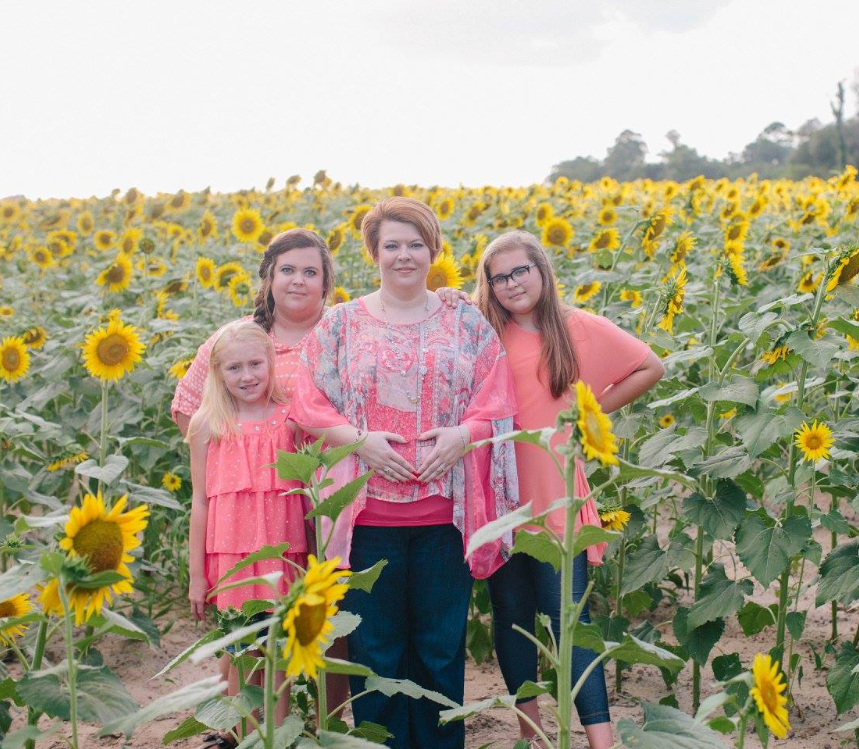
The Girls and I
I’ve ruminated over Bailey’s struggle for two years now. I often wondered how I could help her transition. I needed her to feel safe, loved, and appreciated. How could I help? My husband tends to be intrinsically and emotionally motivated to do good deeds for other people; I often observe him helping others even when I do not agree with his decisions to do “the right thing.” I have learned many lessons from him in the last two and a half years about unconditional love and support of others. I analyze his behavior
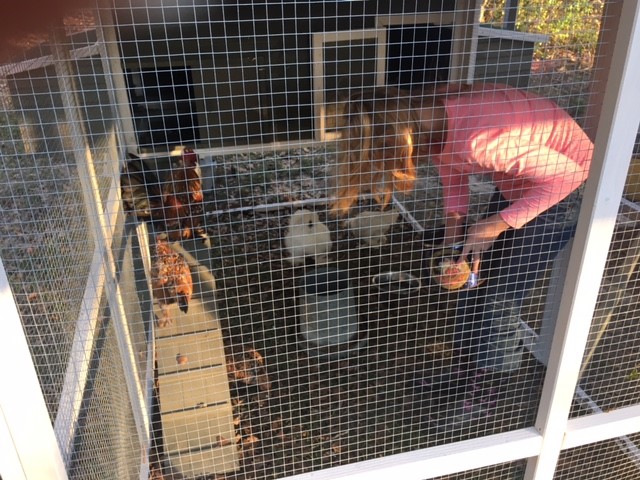
Bailey and Our Smallest Hens
and motives quite often in my mind, wondering if I too could make the right decision when faced with an ungrateful, undeserving person in need. My contemplation leads me to only one conclusion about his decision to bring home our chickens: to strengthen our family’s bond. I was unable to predict that the daily caring of our hens, roosters, and turkeys would lead to Bailey and me growing closer as step-daughter and step-mother.
My grandmother often told me that the Lord works in mysterious ways, but who knew that He could work through a bunch of yard birds. Each day we feed, water, and commune with our fouls. Bailey meticulously takes up eggs each afternoon for incubation, and together we turn and clean them. This weekend, I will put this week’s egg in our incubator for our first round of hatchlings.
When Bailey spends the weekend with her mom, I know her mom will hear all about her chickens and our daily musings about them. She often brings family members to our house to see our coops, and she always asks me to take her out there. I love Bailey. I love my chickens, and maybe one day, we can ALL love each other.
Can you guess what I have been teaching this week in Ninth Grade Literature? I know in the depths of my being that William Shakespeare appreciated the serenity of communing with a flock of chickens. However, I cannot be sure that he and his Elizabethan counterparts utilized chicken tractors to exercise birds and improve nutritional health. On our farm, preparing to build and maintain a Chicken Tractor is imperative because we cannot let our chickens range freely. Due to dogs, foxes, coyotes, hawks, owls, and other predators, a chicken tractor gives us options to improve our flock’s quality of life. Chicken experts explain the purpose of a Chicken Tractor:
“The idea is you move a chicken tractor across your pasture (or backyard) every day, or every few days, so your flock constantly has fresh vegetation to forage in. Chickens like to eat the tender tips of grass and weeds, and they especially relish bugs, slugs, and snails—which helps make a dent in the pest population on your property. As you move the tractor around, they leave their nitrogen- and phosphorus-rich manure behind them” (Modern Farmer, https://modernfarmer.com/2016/08/chicken-tractor/).
Chris will focus more on the construction of the tractor because we want to use materials that we have readily available. For instance, my daddy had a metal framed tarp covered shelter in his yard. The tarp long ago rotted, but the metal frame still stands. I can actually see Chris’ ideas about utilizing that frame for our future tractor at Cypress Lane Chicken Farm. How will he construct it? How will it remain mobile? What areas of the property will we allow our chickens to graze? For a man who works with metal each day, this metal frame gives him the opportunity to be creative as well as practical. Here’s to our future tractor. As we plan the construction, I will update the blog with plans and pictures of finished product. At the end of a Shakespearean play, the stage directions would say: EXEUNT!
I must give a shout out to my partner in education: Addie Tucker. She and her students have helped me with our chicken project. Before Chris and I went to the sale and purchased an incubator, Addie and her kids took in a few of our Duff and Maran eggs to incubate. Last week, we added two turkey eggs so that the chickens wouldn’t damage the hen’s nest. I am so pleased to announce that Addie and her second block students let me know that the candling today showed movement and growth in the turkey eggs as well as the duff and maran eggs. Chris and I are working on the incubation of the Mille Fleur eggs we collect this week at home. THANK YOU, Addie and kids for advice on incubation and brooding. Next, we will have to prepare our brooder at home, but until then, the FFA students will brood our hatchlings. One last thing, I have a broody turkey hen, so I left her with two eggs this week. I hope they hatch and she is able to brood these babies.
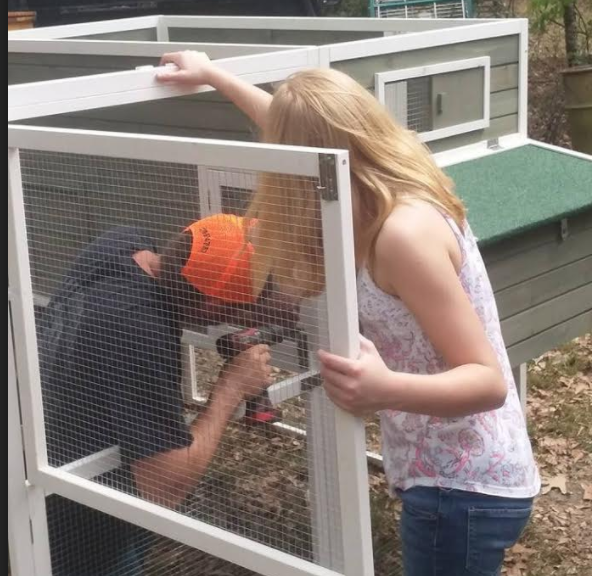
Bailey and Chris put together our new coop for my $70 Mille Fleur Bantams.
Since the inception of 2018, Chris has obviously been contemplating hobbies for our family. Knowing him as well as I do, I can assume that he aimed at a hobby that would promote the children (and myself) to get outside more. First, our next to oldest child requested a goat, then our oldest child requested a rabbit, and our two youngest will just go along with the crowd.
At the children’s prompting, Chris must have been inspired to bring home hens, a rooster, and two turkeys. I spend so much time just standing with them that he often comes home from his welding shop to stare at the coop while I am bending over talking to a bunch of scurrying poultry.
Last Wednesday while getting ready to go to bed, Chris says: “Honey, let’s take the kids to the sale in Gray on Saturday evenin’.” Now, being from Georgia and remembering my chicken rearing days of my youth, I decided: hey, a girl’s gotta go to the sale at least once. Last Saturday night off to the sale we go.
I threw caution to the wind!!
Surprisingly, I loved the sale!! We watched as they auctioned off goats first, followed by ducks, chickens, and rabbits. Before we found our seats, we checked out the selection of bantams because I wanted a small rooster to put in a separate coop for my Silkie (Priss) and Silkie Mix (Sookie). We looked at three sets of bantams, but I said to my husband, “Baby, I have to get these–the three Mille Fleurs!!” Our neighbors Ms. Sherry and Ritchie arrived at the sale, and Chris overhears Ritchie say that Ms. Sherry’s husband demanded they not come back to Roddy, Georgia, without those Mille Fleurs.
I like to think that Chris was such an avid bidder due to my love of those beautiful, Dutch chickens, but I am positive he was adamant to out bid our neighbor, Mr. Jack. I watched as he quietly raised his hand when the bidding began, and sitting directly behind him, Ritchie also raised his hand with each incremental increase. Soon Chris stood and just kept his arm in the air, and I screamed: “Baby, sit down!”He remained steadfast and purchased those chickens for 70 dollars a piece.
I must admit that those chickens cost more than the 200 dollar steer calf that was sold at the beginning of the evening. He also bought an incubator, a black pregnant rabbit, two more sets of bantams, and two cages. Sunday, we worked to put together the new coop for the Mille Fleurs, Sookie, and Priss.
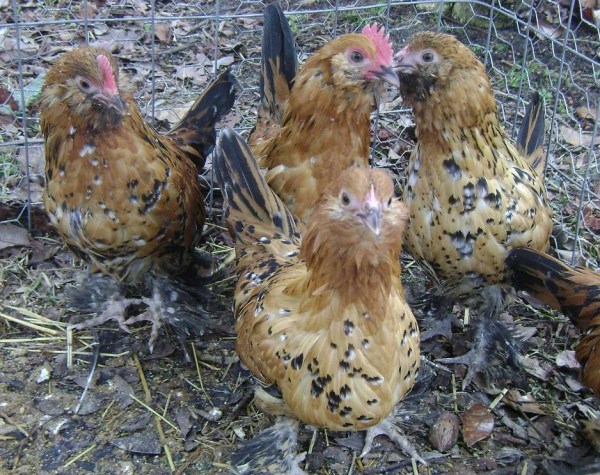
Mille Fleur Bantam Hens
The Fleurs have yet to be named; may be I will just call them Mega Millions, Powerball, and Fantasy Five.
February 3, 2018, my husband visited our local livestock sale, and unbeknownst to me, he brought home several birds to place in our yard’s empty coop. On the back of his truck, I saw: four Barred Rocks, six Buff Orpingtons, a Blue Maran, an Ameraucana, a Rhode Island Red rooster, a Silkie mix, and two turkeys. I was happily surprised that he took initiative to start our flock, but we had issues with the old backyard coop. Unfortunately, the coop still needs a replacement door, but our flock is doing well.
We added to our numbers and bought this new coop March 17, 2018.
Several issues have arisen as the days have progressed: pneumonia and predators. Because we started our flock in the winter months, many hens and roosters can suffer from pneumonia. We talked to our neighbors who have a flock that is several years old for advice; the Jones’ suggested immune boosters inside the water supply. Farm Supply has several options; ultimately, Chris and I chose VetX, Poultry Remedy. Choosing VetX allowed to focus on the affected animal. It is imperative to check the health of your flock several times a day, which would include successful egg laying.
Harassment from predators and lack of nutrition can cause a decrease in egg production. Our eight year old miniature schnauzer, constantly runs around our coop and barks incessantly. His harassment decreases the egg production of our hens. In order to improve production, we discipline our pup to keep him from the coop and increase the laying pellet feed for our older hens. Why is proper nutrition good for egg production? Proper nutrition will improve laying frequency and egg size. In the last week or two, we have noticed that our hen’s egg production has decreased due to the decline in temperature. Since it is early spring, the cooler nights and morning can affect egg laying.
Ultimately, building our flock will be a constant chore. This Saturday we will sell some of our younger hens as well as our older hens who are not producing. Although I find it hard to depart with my beloved birds, my goal is to improve egg production in order to incubate and brood; therefore, we must replace these hens with hearty, frequent egg layers.










 Curvaceous Chick's Coop