Dealing with Illness in my Flock
While doing research about caring for my sick birds, the best advice I found was: isolate a sick bird from the flock. I wanted someplace I could keep the sick bird or birds and have quick, easy access to them. While at the sale, Chris purchased a large bird cage.
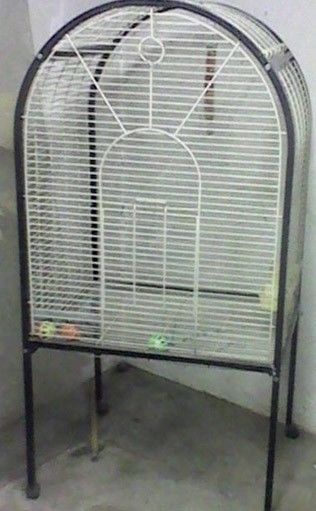
I keep the cage on the back porch so that I can check on the birds several times a day, feed and water them by hand, administer medication as needed.
Also, I assess symptoms and determine what illness my pets have. Three weeks ago, I noticed my Mille Fleur hens were acting sickly. I recognized that neither one of the hens were laying eggs anymore. However, I had added three bantam hens to the coop, so I dismissed this symptom as “STRESS.” On day two without eggs,
I noticed that one of the hens had swollen eyes and was struggling to breathe. She was quarantined right away. The chicken hospital had its first patient. I felt anxious about caring for her because Chris had foolishly spent seventy dollars on her and her roster at the sale. Because of her beauty, I vowed to keep her alive. I contacted a local vet for advice, and she agreed that her sinuses were filled with mucus that was causing swelling of her eyes and hardening of mucus inside her nostrils.
Treating the Ill Chickens
Chris and Bailey made a trip to Tractor Supply and purchased the antibiotic, Tylan. Tylan is a broad spectrum antibiotic that can be given by mouth. I chose this type because I was feeding the hen by hand because she refused to eat.
I also fed her pedialyte for infants with a dropper. For the first two days, I gave her pedialyte three times a day, and during the third feeding, I would add the Tylan to the dropper. The amount of Tylan given to Honey, the Mille Fleur, was based on her weight.
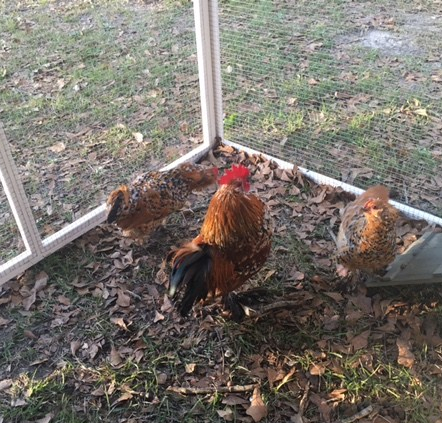
Before putting her on the roost, I also put warm compresses on her eyes and cleared her nostrils. By the end of the week, Honey looked so much better and began eating and drinking on her own. Unfortunately, her rooster, Mr. Big, showed similar symptoms on day five of her hospital stay. In a previous blog, I mentioned that chicken illness are highly contagious, which includes sinus and respiratory infections.
Learning from my Experiences
Upon seeing similar symptoms, Mr. Big was isolated from the other hens inside his coop and placed into the hospital with Honey. At the time of Mr. Big’s hospital stay, he was still eating and drinking on his own (I believe that I am getting better with noticing symptoms of sickness). So, I treated him with Tylan by placing it inside his water each day; so far, he and Honey continue to improve daily. Chris and I have decided to purchase a separate coop for the Mille Fleurs, and before we find a few more hens to cohabit with the pair, we will keep new hens together in quarantine so that new chickens do not expose our flock to new illnesses.
Although I am better at animal husbandry than I was at the beginning of our family project, I still occasionally find a dead hen or rooster that never displayed symptoms of sickness. Most of the time, chickens display symptoms after their little bodies are very weak.
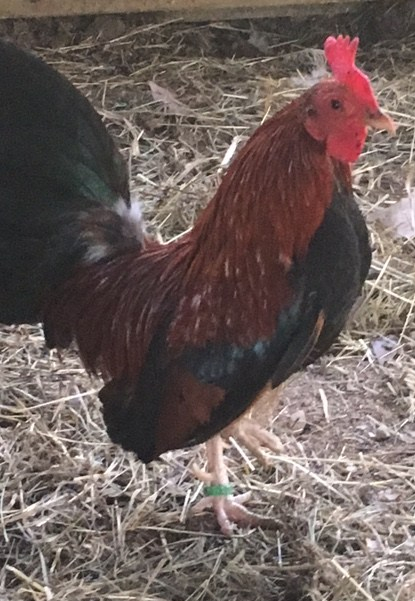
Yesterday, Chris found our BB Red rooster dead in our largest coop. He was one of our older bantams, but he had showed no weakness prior to his passing. I am still learning to care for my flock, and I hope I get better at recognizing illness and treating sick chickens before it’s too late. We will miss you, B.B.
Post Script—
My childhood best friend, Bubba Hendrix passed away April 4, 2018. I will miss you dearly. I love you, my friend.

 Curvaceous Chick's Coop